Dermatologist in Antalya: Acne, Rosacea, Psoriasis and Mole Checks
Author: Uzm. Dr. Oya Oylum Argun, dermatologist
What is dermatology?
This is the medicine underneath aesthetic treatments. It covers the diagnosis and follow-up of conditions of the skin, scalp and nails.
Is a dermatologist the same as a skin doctor?
Dermatology is the specialty; a dermatologist is what people often call a skin doctor or skin specialist. Someone who sees a doctor for a skin problem in Antalya comes with the conditions on this page. Specialist Dermatologist Dr. Oya Oylum Argun carries out the examination; the practice is in Muratpaşa.
Which conditions does a dermatologist treat?
Common conditions include acne and acne scars, rosacea, psoriasis, eczema, fungal infections and nail problems. Most of these are not resolved in one visit; they have flare-ups and calm periods and need follow-up.
How is a mole check done?
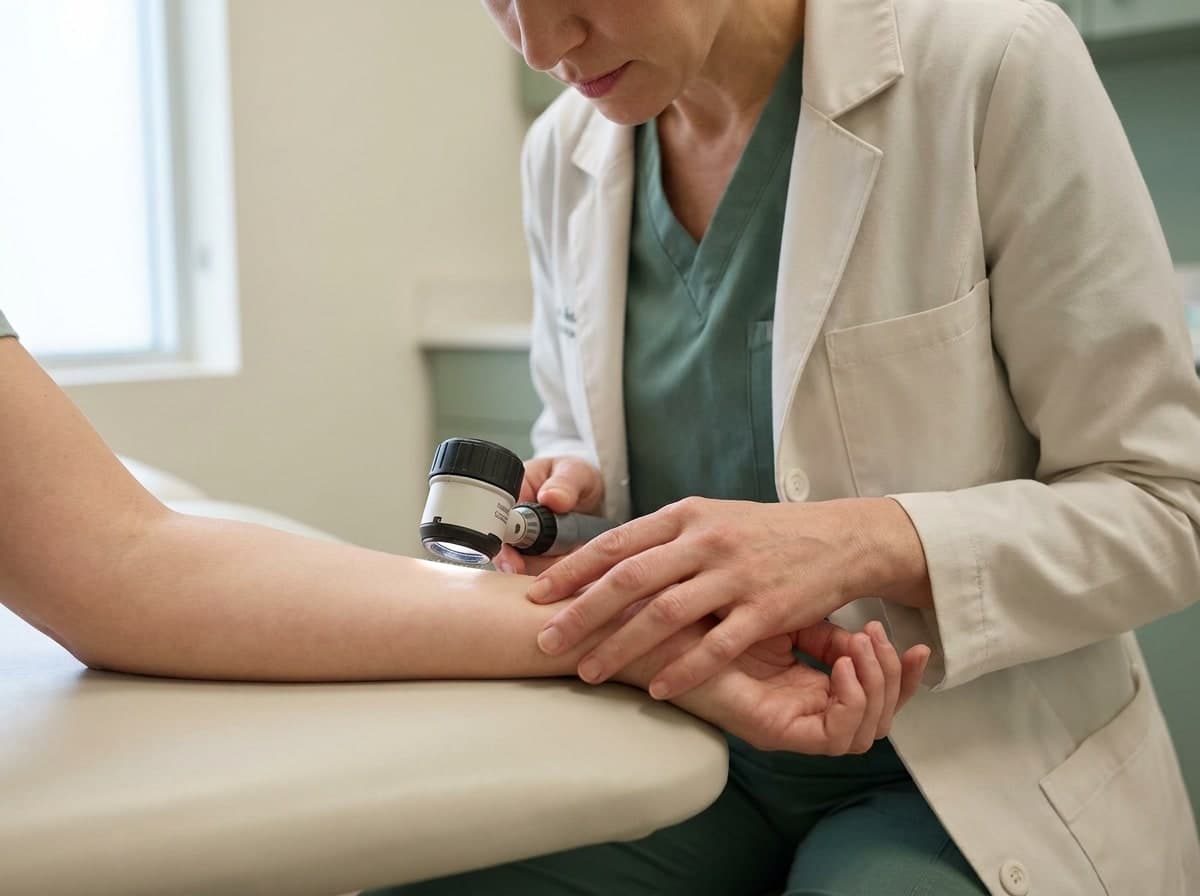
Mole checks are a separate subject. Looked at with the naked eye, a mole shows only its surface. A dermatoscope magnifies and removes surface reflection, so the pigment pattern and vessel structure beneath become visible. The check is painless and takes a few minutes.
Time spent in the sun is long in Antalya. That makes skin health a subject that does not fit into one season of the year.
When should you see a dermatologist without waiting?
When not to wait for a routine appointment. Most of the conditions above are followed with planned visits. The following need assessment without delay:
- A change in the shape, colour or size of a mole.
- An area that itches, bleeds or crusts over and does not heal.
- Hair loss lasting for months.
- A widespread rash, or a skin finding that comes with a fever.
- Swelling of the lips, tongue or around the eyes; difficulty breathing (angioedema).
Frequently asked questions
Is a dermatologist a doctor, and how many years do they train?
Yes, a dermatologist is a doctor who has completed specialist training in skin diseases after medical school. Six years of medical school are followed by four years of specialist training in Dermatology and Venereology, so the total is at least ten years. The abbreviation “Uzm. Dr.” in a Turkish title means specialist doctor.
Do I need to be fasting for a dermatology appointment?
No, you do not need to be fasting for a dermatology examination. Fasting is requested only for some blood tests, and the doctor tells you separately. It helps to bring a list of the medicines and creams you use, and any test results you have. For face and nail complaints, come without make-up and without nail polish.
Is psoriasis contagious?
No, psoriasis is not contagious. It does not pass on by touch, by sharing a towel or in a swimming pool. Psoriasis is a long-term condition that arises when the immune system speeds up the renewal of skin cells. There is no treatment that removes it completely, but with suitable treatment it can be kept under control for a long time.
What makes eczema flare up?
Dry air, hot and long showers, perfumed soap and detergents, wool and synthetic fabrics, sweating, stress and lack of sleep are common triggers of eczema flares. Triggers vary from person to person. The basics of eczema care are regular moisturising and keeping away from the trigger. Eczema in babies and children is also seen by dermatology.
When should itching be seen by a doctor?
If itching lasts longer than two weeks, disturbs sleep, has spread over the whole body, or comes with weight loss, fever or night sweats, it needs assessment without waiting. Itching that starts with swelling of the lips or eyelids, or with shortness of breath, is an emergency, and you should go to the emergency department. The most common cause of itching is dry skin.
This page is for general information and does not replace an individual medical assessment. The approach that suits you is decided at the consultation.
Last updated: 8 September 2026
The treatment images on this page are illustrative and AI-generated. We do not use images of real patients, out of respect for patient privacy and in line with Turkish health-communication regulation. Photographs of the clinic and the physician are real.
Prices
Prices are in Turkish lira and are the same for every patient. The euro figure is approximate, calculated at a fixed rate set on 2026-08-09.
- Dermatology consultation (in person or online, same fee)
- ₺4,000 ≈ €73
- Mole removal with biopsy and pathologyper lesion
- ₺9,500 ≈ €172
- Mole removal by laserper lesion
- ₺5,000 ≈ €91
- Wart removalper lesion
- ₺4,000 ≈ €73
- Skin tag removalper lesion
- ₺2,000 ≈ €36
- Allergy testing
- Priced after examination
The final plan and price are confirmed at the consultation, after your skin has been examined.
See the full price list →Related articles
- Summer is over: time to check your molesWhat you look for is less how one mole looks than change and difference. A home check does not make a diagnosis; it tells you when to see a doctor.
- How does a dermatoscope show a mole?To the naked eye, a mole shows only its surface. A dermatoscope gets past this limit. The procedure is painless and takes a few minutes.
- “If you touch a mole, it wakes up.”This is one of the beliefs that most often delays an examination. The real risk is the opposite: a mole that is changing being left unmonitored.
- How do sun spots form?A sun spot does not appear in a day. It is the result of a build-up that spreads across the whole year and carries on through every season, and summer is the most intense period of that build-up.
- What does a dermatologist treat, and when should you see one?A dermatologist looks after diseases of the skin, hair and nails. Cildiye and dermatology are the same department.
- What causes spots?A spot forms when the oil gland at the base of a hair becomes blocked and inflamed. Hormones stimulate the oil glands more than anything else.
- What makes eczema worse?Eczema is a skin condition in which the skin barrier is weak, and it is itchy and dry. It is not contagious.
- Is psoriasis contagious?Psoriasis is not contagious. A dermatologist looks after psoriasis.
Not sure what you need? That is exactly what a consultation is for.
Book an appointment